
Gel Time Is Not Return-to-Service Time: Planning a Pipeline Lining Outage
Gel time, curing time and return to service describe different milestones. Plan a pipeline lining outage around the approved system, actual conditions, inspection records and a clear release decision.
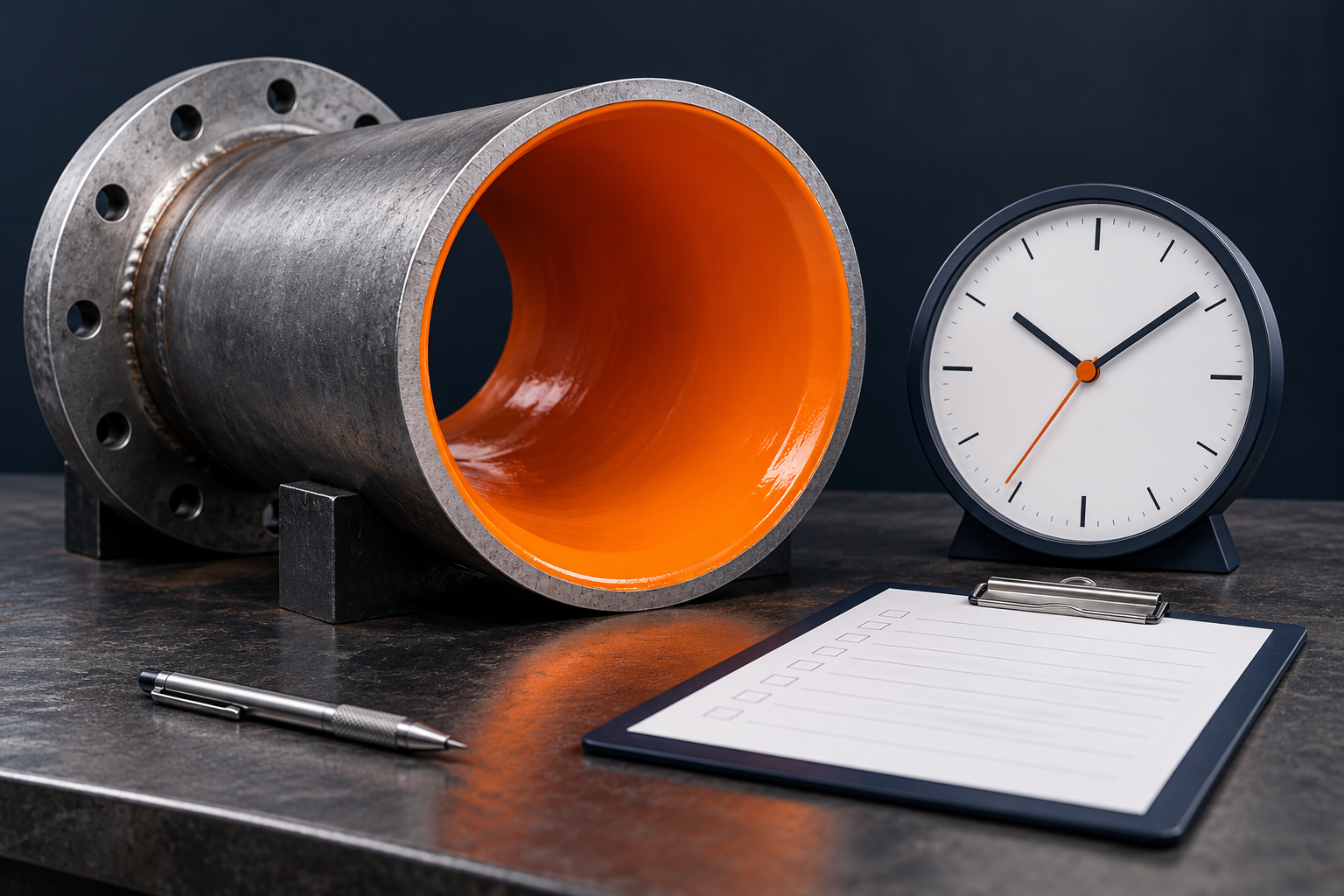
A lining that stops flowing in seconds has reached an important application milestone. That does not, by itself, tell an operator when a pipeline can carry water, chemicals or process fluid again. A return-to-service decision needs the approved system’s instructions, the actual installation conditions and the project’s acceptance record.
For owners planning an outage, the useful question is not simply “How fast does this polyurea cure?” Ask instead which event each published time describes, what conditions it assumes and who will authorize the next step. This is a planning guide, not permission to operate a particular line.
Separate the milestones on the schedule
Product literature may list gel time, handling or traffic time, recoat intervals and curing time. Those headings describe different stages and should stay separate in the work plan. An early milestone that makes application practical does not automatically satisfy the requirements for immersion, pressure testing, cleaning or final operation.
A concrete example appears in Sika’s published information for Sikalastic-835 I: its test-results table lists approximately five seconds for gel time and approximately 24 hours for curing time, with separate traffic stages. The manufacturer also says conditions affect those times. This is an illustration of why the labels matter, not a recommendation of that product for a pipeline or a transferable 24-hour release rule.
At the planning meeting, place each milestone beside the activity it permits. If the technical documents do not say whether a particular exposure is allowed, get a project-specific answer from the system manufacturer rather than filling the gap with a sales phrase.
Define the service before asking for a release time
“Back in service” can mean several things. Handling a coated spool, inspecting a lined sewer, introducing a cleaning solution and delivering drinking water are different exposures. The schedule should identify the intended first exposure and subsequent operating conditions clearly enough for a technical reviewer to assess them.
Prepare a short service description covering the conveyed material, normal and anticipated temperature range, internal or external coating location, and any proposed cleaning, disinfection or test sequence. Include the selected primer, lining, repair material and topcoat where relevant. Assess the complete specified system rather than borrowing a time from one component.
This preparation also makes disagreements visible early. A contractor may be quoting when a surface can be handled, while an owner is assuming that customers can receive water at the same time. Resolving that difference before the outage is more useful than arguing over the word “cured” on the final shift.
For drinking water, read the exact listing
NSF describes NSF/ANSI/CAN 61 as a standard for evaluating the health effects of products and materials that contact drinking water. Its scope is not a blanket approval of every coating within a chemical family or every application of a listed product.
The NSF coating listings show why the details deserve attention: entries can include water-contact size restrictions, coating thickness limits, permitted colors, cure temperatures and final cure periods. Match the exact product and end use to the current listing and the manufacturer’s instructions. Do not assume that a tank-coating listing covers any pipe diameter or that a familiar certification mark authorizes immediate water service.
The utility or responsible authority must also identify the applicable commissioning and water-quality requirements. Certification documentation is one part of that assessment; it does not replace the site’s release procedure.
Keep the field record connected to the schedule
A planned completion time is only a forecast until the work is documented. Record when each relevant layer or repair was finished and retain the environmental and application records required by the specification. If conditions differ from the assumptions behind the approved schedule, refer the difference to the responsible technical reviewer.
Build inspection and possible repairs into the outage plan. A late repair should not disappear into the original main-coat completion time. Ask which checks must be repeated, what waiting period applies to the repaired area, and who will accept the result. Avoid improvised shortcuts such as increasing heat without an approved procedure.
Make release an explicit decision
A useful closeout sheet identifies the line segment, coating system, relevant completion times, required inspection results, unresolved exceptions and authorized release decision. Keep supporting instructions accessible to the person making that decision. If a required test, document or approval is missing, show it as an open item rather than treating an attractive finish as evidence of readiness.
Fast application can be valuable. The dependable way to benefit from it is to plan around documented milestones, not to collapse them into one promise. Gel time helps explain how a coating goes on; the approved service conditions and acceptance process determine what happens next.
For sewer projects, also distinguish these release records from the questions a pre-lining CCTV inspection can answer. A useful condition survey and a documented service-release decision serve different purposes.
General planning information. Follow the approved project specification and manufacturer instructions. Cover: original AI-generated conceptual illustration.
Put this to work on real pipe.
Whether you want to spray pipeline coatings or need a line coated, one short form gets you to the right person.